Why Is My Grill Overheating? 5 Causes & Fixes
If you're asking "why is my grill overheating," the short answer is that one of three systems has failed: fuel delivery, airflow, or temperature sensing. On a gas grill, the regulator or burner tubes are usually the culprit. On charcoal, it's almost always airflow or too much fuel.
Pellet grills overheat when the controller misreads the temperature.
Lid thermometers on most grills can be off by 50 to 100 degrees Fahrenheit compared to grate-level temperatures. That's a common reading error, not an actual overheating event. Before you start swapping parts, make sure the grill is really running hot.

Quick Answer: Is It Actually Overheating, or Is the Thermometer Lying?
Why is my grill overheating? First, confirm it actually is. Grill lid thermometers often read 50 to 100 degrees hotter than grate temperature.
That means your grill may be fine. A separate digital probe gives the true reading. If the grate probe also reads too hot, then fuel or airflow is the problem.
First: Know Your Grill's Normal Temperature Range
Every grill type has a normal operating range. If you don't know yours, a slightly high reading can look like a disaster. Here are typical temperature ranges per grill type based on manufacturer specifications and standard smoking and grilling methods.
| Grill Type | Low-and-Slow Smoking | Direct Grilling | High-Heat Searing or Pizza |
|---|---|---|---|
| Gas grill | 225 to 250 °F | 350 to 450 °F | 500 to 700 °F |
| Charcoal grill | 225 to 275 °F | 350 to 450 °F | 500 to 700 °F |
| Pellet grill | 180 to 250 °F | 300 to 450 °F | 500 to 600 °F |
| Kamado grill | 225 to 275 °F | 350 to 450 °F | 600 to 750 °F |
A gas grill that settles at 600 °F for direct grilling is too hot. But a kamado at 600 °F for pizza is normal. The first question isn't "how do I cool this down?" It's "what should this grill be doing right now?"
That's where two-zone cooking helps. You build a hot side and a cool side. That gives you control when the grill wants to run away.
Before You Touch Anything: 30-Second Safety Checks
An overheating grill can turn into a grease fire fast. Run through these checks before you touch any dial, damper, or regulator. They take less than 30 seconds.
- Turn off the gas at the propane tank or natural gas shutoff valve if you can do so safely.
- Leave the lid open. Closing it traps heat and makes flare-ups worse.
- Do not add water to the grill. Water on a grease fire spreads it.
- Check for active flames outside the burner area. If you see a grease fire, back away and call the fire department if it won't smother.
- Let the grill cool before inspecting burners, tubes, or probes.
According to the NFPA grilling safety guidance, grills should always be used outdoors and away from siding, deck railings, and overhanging branches. Overheating is a warning sign that something in that system is off. Your first job is to stop the heat source safely, then diagnose.
If you ever see flames coming from under the grill or around the propane tank, shut the tank off and evacuate the area. That's not a temperature problem anymore. That's an emergency.
Gas Grill Overheating? This Is Usually the Culprit
Gas grills overheat for three main reasons: the regulator locks up, the burner tubes get clogged, or the lid thermometer lies to you. Let's break each one down so you know exactly what to check first.
Regulator Locked on Full
The gas regulator controls pressure from the propane tank to the burners. It should hold around 11 inches water column for propane, or about 7 inches for natural gas. When the regulator fails, it can let through too much pressure.
That means the flame runs rich and the grill gets way too hot.
A very common trigger is opening the propane tank valve too fast. The regulator's safety mechanism sees that sudden pressure spike as a leak and shuts down flow almost completely. That makes the grill barely light.
But sometimes the opposite happens. The regulator sticks in a wide open position. Then you get full gas pressure with no modulation.
Here's the regulator reset procedure you'll find in most manufacturer manuals:
- Turn off all burner knobs.
- Turn off the propane tank valve completely.
- Disconnect the regulator hose from the tank.
- Wait 2 to 3 minutes.
- Reconnect the hose to the tank.
- Open the tank valve very slowly, about a quarter turn, then open it fully.
- Turn on one burner and light it.
- Check if the flame looks normal and stable.
If the grill still runs too hot, the regulator itself may be faulty. Replacement is cheaper than fighting it. Always do a soapy water leak test on the connections after any regulator work.
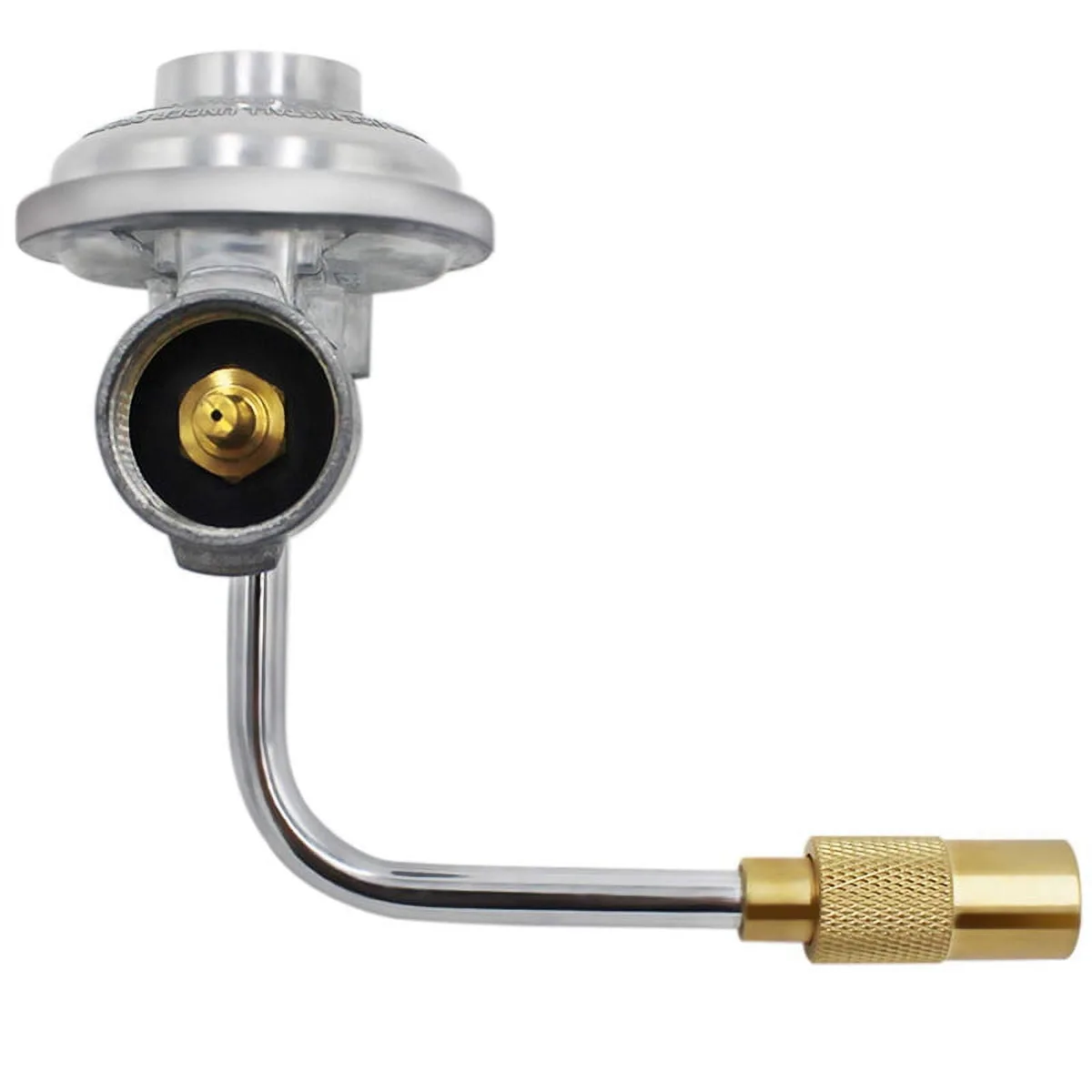
Burner Tubes and Venturi Blockages
Your gas grill's burners pull air in through the venturi tubes before the gas mixes and ignites. Spiders love building nests in those tubes. Dirt, grease, and insect webs block the air inlet.
That makes the gas mixture too rich, which produces a taller, hotter, yellow flame instead of a clean blue one.
A yellow flame is your biggest clue here. Blue means correct air-to-fuel ratio. Yellow or orange means the burners are starving for air and burning too hot in the wrong places.
To fix it:
- Turn off the gas and disconnect everything.
- Remove the grates and heat deflectors or flame tamers.
- Take out the burner tubes.
- Run a venturi brush or pipe cleaner through each tube.
- Clear the air shutter openings at the tube ends.
- Reinstall and test for a blue flame.
As of 2026, this remains one of the most overlooked gas grill issues. A 10-minute cleaning often drops the grate temperature by 100 degrees or more because the burners finally get the air they need.
Lid Thermometer Misreading
The dial on your lid is an analog thermometer that takes a beating. Sun exposure, grease buildup, and moisture all make it drift over time. It also reads high because heat rises to the top of the closed lid, well above the cooking grate.
That's why a grill showing 600 °F on the lid can be cooking food at 500 °F or less. And that's why recipes based on lid temperature often burn food or make you think the grill is overheating when it's actually fine.
Check it with a simple calibration. Boil water, dip the probe in, and see if it reads close to 212 °F at sea level. For a digital probe, use an ice water bath.
If the lid thermometer is off by more than 25 degrees, replace it or just ignore it and use a separate digital probe clipped to the grate.
Charcoal Grill Running Too Hot? Here's What's Actually Happening
Charcoal grills overheated for two simple reasons: too much fuel and too much air. The fix is usually just closing dampers or removing some charcoal. But there are a few less obvious causes that catch people off guard.
Too Much Charcoal in the Basket
When you pile in more charcoal than your grill needs, the fire has more fuel to burn. That drives the temperature up, sometimes past 700 °F. For low-and-slow smoking, you only need a small pile of lit coals that burns slowly.
Dumping a full chimney of blazing briquettes into the basket will overshoot every time.
A better approach is the minion method or snake method. You place unlit charcoal in a ring or pile and add a few lit coals on one end. The fire creeps through the fuel slowly.
That gives you 225 to 250 °F for hours instead of a 600 °F inferno.
For direct grilling, try this baseline amount measured in standard briquettes:
- Small kettle grill: 30 to 40 briquettes
- Medium kettle grill: 40 to 50 briquettes
- Large kettle or ceramic grill: 50 to 70 briquettes
If you're using lump charcoal, use less because it burns hotter and faster than briquettes.
Dampers Left Wide Open
The intake damper and exhaust damper control how much oxygen reaches your charcoal. Wide open on both means maximum airflow and maximum heat. That's fine for searing a steak, but it will quickly push a grill past 500 °F if you loaded enough fuel.
Most charcoal grills settle into low-and-slow range when you close the intake damper to about one quarter open and the exhaust to half open. Exact settings depend on your grill, wind, and fuel type, but the rule is simple: less air, less heat. Start closing the intake damper first.
Give the grill 10 to 15 minutes to respond before adjusting again.

One mistake people make is adjusting the exhaust damper only. The intake damper controls the fire more directly. Close it down and you'll see the temperature drop faster.
Air Leaks and Gasket Problems
Kamado grills and some barrel smokers rely on gaskets to seal the lid. If that gasket wears out, air leaks in around the lid edge. That extra oxygen feeds the fire and makes it run hotter than intended.
You'll also struggle to keep the temperature down even with both dampers closed.
Check the gasket for flat spots, cracks, or gaps. The classic test is the dollar bill test. Close the lid on a dollar bill somewhere along the seal.
If the bill slides out easily, the gasket is shot in that spot. Replace the gasket and you'll regain control.
On a standard kettle grill, the lid is not airtight and never will be. That's fine. You just manage heat with the dampers.
But if you see smoke escaping from large gaps around the lid, you might have a bent rim or an ill-fitting lid. That can cause unpredictable temperature spikes.
The fastest fix for a charcoal grill running too hot is not to fight the fuel. It's to remove some charcoal. Use long tongs to lift out a few lit briquettes and drop them into a metal bucket.
Then close the intake damper halfway. The temperature will fall within 10 to 15 minutes.
Pellet Grill Overshooting? This Is Different From Gas and Charcoal
Pellet grills are supposed to be the set-and-forget option. So when one starts running at 500 °F on a 225 °F setting, something in the automatic system has failed. The cause is almost never raw fuel pressure like a gas grill.
It's the sensor, the controller, or the pellet feed.
PID Controller and RTD Probe Issues
The RTD probe tells your controller what the temperature is inside the grill. If that probe is covered in grease, sitting too close to the metal wall, or just failing, it sends a bad reading. The controller then dumps more pellets into the firepot to chase a temperature that isn't real.
That's why a pellet grill can overshoot by 100 degrees or more and never settle down. The controller thinks the grill is cold. It keeps feeding fuel.
The actual fire gets hotter and hotter.
The fix is usually simple. Clean the RTD probe with a damp cloth or fine steel wool. Check that it's positioned away from the grill body and not touching any metal plate.
If it still reads wrong, replace it. Most replacement probes cost between 15 and 25 dollars and take about 10 minutes to swap.
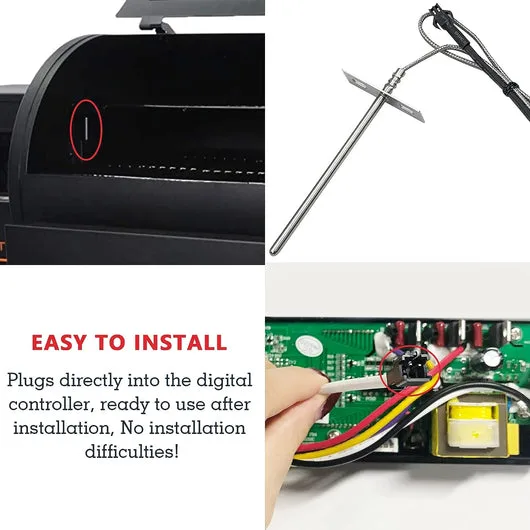
Some pellet grills let you recalibrate the probe through the controller menu. If yours does, offset the reading by the amount it's off compared to a known good digital probe. If the controller itself is misbehaving, a factory reset can clear the glitch.
Auger Feed Rate and Pellet Type
The auger turns and pushes pellets into the firepot. If the controller runs the auger too long, too much fuel piles up. That creates a hotter fire than the set point calls for.
This is more common on older controllers without PID logic.
PID controllers, by contrast, learn how fast the grill responds and pulse the auger accordingly. If you're using a non-PID controller, occasional overshoot of 25 to 50 degrees is normal. Sustained overheating above 75 degrees is not.
Pellet type matters too. Softwood pellets like hickory or fruit blends burn hotter per volume than some hardwood heating pellets. Switching pellet brands can change how hot your grill runs on the same setting.
If you recently changed pellets and the grill started running hot, that's a clue.
Grease Fires and Flame Tamers
Pellet grills accumulate grease inside the cooking chamber. That grease sits on the heat deflector plate and the flame tamer. When the grill gets hot enough, that grease ignites.
A grease fire produces a massive temperature spike and can damage the controller, probe, and paint.
Preventing this is straightforward. Clean the heat deflector and grease tray after every few long cooks. Scrape the flame tamer before high-heat runs.
Most pellet grill manufacturers recommend cleaning the firepot every 3 to 5 cooks to prevent pellet dust buildup, which can also cause runaway fires.
If a grease fire starts, do not pour water on it. Close the lid if you can safely do so, unplug the grill, and let it burn out under a closed lid with the auger stopped. Once it cools, clean everything before the next cook.
The Fastest Ways to Lower Grill Temperature Right Now
When the food is about to burn, you need the heat down in minutes, not half an hour. The exact move depends on your grill type, but the goal is always the same: reduce fuel or reduce oxygen.
For a gas grill, turn the burner knobs down first. Open the lid to release trapped heat. If the grill is still running hot, do the regulator reset sequence from the gas section.
Cutting gas at the tank and restarting slowly often drops the flame intensity immediately.
For a charcoal grill, close the intake damper halfway. That cuts oxygen and drops heat over about 10 minutes. Need it faster?
Remove a few lit coals with long tongs into a metal bucket. Even faster, create a cool zone by moving the food to one side and leaving the hot coals on the other.
For a pellet grill, the fastest controllable fix is to lower the set point and open the lid briefly to release heat. If the grill keeps climbing anyway, unplug it. Let it cool, then clean the probe and firepot before restarting.
A runaway pellet fire doesn't respond to a dial.
The key is to react before panic sets in. Keep the lid open as much as possible while you adjust. That alone bleeds off 50 to 100 degrees in under a minute on most grills.
Mistakes That Make Overheating Worse
You'd be surprised how many people fight a hot grill by doing exactly the wrong thing. Here are the moves that backfire.
- Closing the lid to “trap less heat.” Actually, closing the lid increases heat retention and makes the fire run hotter on charcoal and pellet grills.
- Spraying water on hot coals or a gas burner. The steam can burn you, and water on a grease fire spreads it.
- Turning all burners off and relighting immediately without resetting the regulator. The gas line still holds pressure, so the problem repeats.
- Cranking the dampers shut completely and waiting 2 minutes. The fire doesn't die instantly. You just suffocate it partially, then it surges when you open them back up.
- Adjusting the exhaust vent only on a charcoal grill. The intake damper controls heat far more effectively.
- Ignoring the grease tray. A hot fire plus built-up grease equals a flare-up that can damage the grill.
One of the most common failure patterns we see in aggregate user reviews is people chasing the lid thermometer. They keep adjusting burners or dampers based on a number that was wrong to begin with. That creates wild swings.
Always verify with a second probe before making big changes.
Grill Types Compared: Why the Same Fix Doesn't Work Everywhere
A gas grill, charcoal kettle, and pellet grill all overheat for different reasons. Applying the wrong fix wastes time and can make the problem worse. Here's the side-by-side breakdown.
| Factor | Gas Grill | Charcoal Grill | Pellet Grill |
|---|---|---|---|
| Main cause of overheating | Regulator failure or clogged venturi tubes | Too much charcoal or dampers wide open | Bad RTD probe or controller error |
| Fastest drop method | Shut burners down, reset regulator | Close intake damper, remove coals | Lower set point, open lid, unplug if runaway |
| Temperature sensor reliability | Lid dial often inaccurate | No sensor, use external probe | RTD probe prone to grease buildup |
| Risk of grease fire | High with dirty trays | Moderate with heavy flare-ups | High with dirty deflector plates |
| Skill level needed | Low to moderate | Moderate to high | Low, but requires cleaning discipline |
Our recommendation is simple. If you cook on gas, learn the regulator reset and check your burner flames once a month. If you cook on charcoal, master your damper settings before adding more fuel.
If you cook on pellets, treat the RTD probe and firepot cleaning as preventative maintenance, not an afterthought.
Maintenance to Prevent Future Overheating
Prevention beats troubleshooting every time. A small monthly routine keeps temperatures predictable and stops most overheating issues before they start.
- Clean gas burner tubes and venturi openings with a brush every month during grilling season.
- Check the gas regulator hose for cracks or kinks. Replace it if you see damage.
- Calibrate or verify your lid thermometer every spring with a boiling water test.
- Clean the charcoal ash tray after every cook. Ash buildup restricts airflow and forces you to open dampers too wide.
- Inspect kamado gaskets twice a year. A tight seal means better control.
- Vacuum the pellet grill firepot and clean the RTD probe every 3 to 5 cooks.
- Empty and wipe the grease tray on gas and pellet grills after long or fatty cooks.
- Store propane tanks upright outdoors, never in direct sun or a hot garage.
- Check for spider webs in burner venturi tubes at the start of each season.
These steps take 15 minutes a month and stop the most common causes of runaway heat. When temperatures stay stable, food cooks evenly and you're not constantly fighting the grill. That's the whole point of owning one.
FAQs About Grill Overheating
Why does my gas grill keep overheating?
The regulator is usually the culprit. Reset it by turning everything off, disconnecting the hose, waiting three minutes, reconnecting, and opening the tank valve slowly.
Why does my charcoal grill get too hot?
You probably loaded too much charcoal and left the intake damper wide open. Close it to one quarter open and remove a few lit coals if needed.
Why does my pellet grill overshoot temperature?
The RTD probe is dirty or failing. Clean it first. If the grill still overshoots, the probe or controller may need replacing.
Can a dirty grill cause overheating?
Yes. Grease buildup on the heat deflector or flame tamer can ignite and spike the temperature. Clean these parts regularly.
How do I stop my grill from getting too hot?
Know your grill's normal range first. Then reduce fuel or close air intakes. Works every time.
Final Decision Guide: Match Your Fix to Your Grill Type
Gas grill? Reset the regulator and clean the burner tubes. Charcoal?
Close the intake damper and remove a few coals. Pellet? Clean the RTD probe and firepot.
If the problem repeats after these fixes, replace the faulty part. A thermometer check rules out false alarms first.

Similar Posts



















