Why Is My Grill Smoking Black? 5 Causes & Fixes
Why is my grill producing black smoke? Short version: something is burning that shouldn't be, or your fuel isn't getting enough air. Black smoke is not normal grill smoke.
It's a sign of incomplete combustion, old grease, or food residue turning to soot.
The good news is the fix is usually quick once you match the smoke to the source. In our research, the biggest split comes down to fuel type and what's actually burning. A gas grill, charcoal grill, and pellet grill all produce black smoke for different reasons.
Here's how to read the smoke and stop it before it ruins your food or starts a fire.
Quick Answer
Black smoke means incomplete combustion or burning residue. Grease and old food are common causes. Damp fuel or blocked airflow also produces black smoke.
Shut off the grill and clean the grates and grease tray. Dry your fuel or unblock burners before cooking again.

First, Check the Smoke Color: White, Blue, Black, or Gray
Smoke color tells you what is burning. Thin blue smoke is the goal. It looks almost invisible with a faint blue tint.
That happens when wood, charcoal, or drippings burn hot and clean.
White smoke at startup is normal. Charcoal grills and pellet smokers often billow white for 10 to 20 minutes. Once the fuel catches fully, the smoke thins out.
White smoke that never clears often means smoldering, not burning.
Black or gray smoke is different. It's thick, sometimes acrid, and it leaves soot on food. That points to three main things: dirty grates, grease buildup, or poor airflow.
If the smoke has a chemical smell, a new grill may still have manufacturing oil on the parts. Run a full burn-off before the first cook.
Check the smoke color before you touch anything else. It tells you whether you have a cleaning problem, a fuel problem, or an airflow problem.
Here's a quick way to read the smoke:
- White billowing at startup: normal for 10 to 20 minutes
- Thin blue smoke: clean combustion, ideal for BBQ
- Black or gray thick smoke: incomplete burn, grease, or food residue
- Chemical or plastic smell: new grill burn-off needed
The National Fire Protection Association lists cleaning as a top grill fire prevention step. You can find their outdoor cooking safety guidance on the NFPA website. A dirty grill is not just a flavor problem.
It's the main reason black smoke turns into a full grease fire.
Match the Cause to Your Fuel Type: Gas, Charcoal, or Pellet
Every grill type fails differently. You don't fix a propane regulator the way you fix damp charcoal. Match the smoke to the fuel before you start tearing things apart.
Gas grills rarely smoke black from the fuel itself. Propane burns clean. If a gas grill is smoking black, look for something on or in the burn path.
That's usually grease, old marinade, or a blocked venturi tube.
Charcoal and pellet grills smoke black when the solid fuel smolders instead of flames. Too little oxygen is the shared cause. Wet charcoal, packed ash, or damp pellets all smother the fire.
The simple decision path looks like this:
| Fuel Type | Black Smoke Usually Means | First Thing to Check |
|---|---|---|
| Gas | Grease on flavorizer bars, blocked burner tubes, bad air mix | Burners and grease tray |
| Charcoal | Damp charcoal, ash choking airflow, old food on grates | Vents and ash cleanout |
| Pellet | Wet pellets, dirty fire pot, poor airflow through burn pot | Fire pot and hopper |
If you smell burning plastic or chemicals, stop and inspect the fuel or new grill coating. If it smells like burnt food, clean first. If the flame is mostly yellow or orange, fix airflow.
Gas Grill Black Smoke: Regulator, Burners, and Airflow Issues
A gas grill that blows black smoke almost always has a burner or cleaning problem. Propane and natural gas burn clean on their own. The soot comes from something else.

Blocked Burner Tubes and Venturi
Spiders love the small openings where air mixes with gas. A single web inside a venturi tube can starve the flame of oxygen. That creates a lazy, yellow-orange flame and black soot.
Turn off the gas and disconnect the tank. Remove the burners. Run a venturi brush or pipe cleaner through the tube.
Reinstall and test. A proper flame is blue with light yellow tips.
Dirty Grease Tray and Flavorizer Bars
Flavorizer bars, heat deflectors, and drip trays catch everything. Old fat burns black when the grill gets hot. Scrape the bars when they're warm after each cook.
Empty the drip tray before it reaches the fill line.
Manufacturers like Weber and Char-Broil recommend cleaning the grease management system after every few cooks. If your tray smells rancid, it's ready to smoke.
Regulator Flow Limiter
Propane regulators trip a safety valve if gas rushes out too fast. You may see a weak flame, low heat, or black smoke when the limiter is stuck. The fix is simple.
Close the tank valve. Turn all burner knobs off. Open the tank slowly, wait 60 seconds, then light one burner at a time.
As of 2026, most propane grills use the same basic regulator design. A reset almost always clears the problem.
Air Shutter Adjustment
Natural gas changes the air-to-fuel ratio. At higher altitudes, you may need to open the air shutter on the burner. Look for a small metal plate near the venturi inlet.
Loosen it and shift it until the flame turns mostly blue. This matters more for natural gas conversions than for standard propane.
Charcoal Grill Black Smoke: Damp Fuel, Ash Buildup, and Poor Vent Control
Charcoal smoke should smell earthy and sweet. If it turns black and acrid, something is smoldering instead of burning. The usual suspects are damp fuel, packed ash, and closed vents.
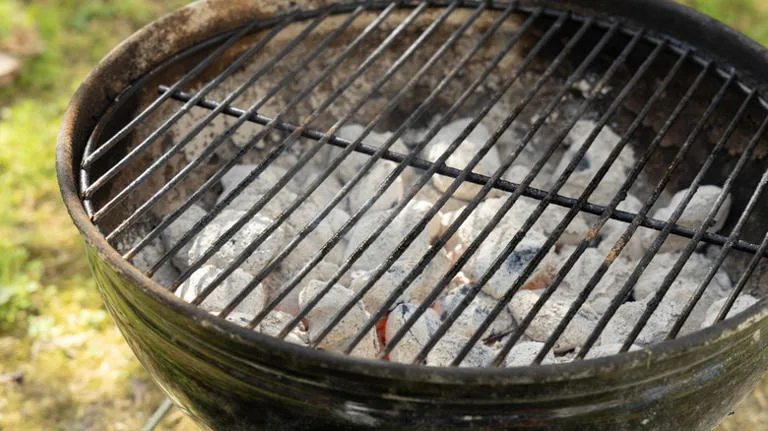
Damp Charcoal
Charcoal absorbs moisture from the air. It only takes a humid week to turn good briquettes into slow-smoking soot machines. Wet charcoal struggles to reach full temperature.
It smokes heavily, then leaves a bitter coating on your food.
Store charcoal in a sealed plastic bin or metal can. Forget the paper bag it came in. If you're stuck with damp fuel, start it in a chimney with dry starter cubes and wait longer.
You may still get more white smoke than usual, but it should burn off.
Ash Buildup
Ash blocks the bottom vent before you notice it. A charcoal grill with a full ash pan can't pull enough air through the fire. The coals fall asleep, then smolder.
That's when black smoke starts.
Every long cook needs an ash check. For a kamado, use the ash tool to stir the ash and open the bottom vent. For a kettle, sweep the ash into the pan and dump it before lighting.
Vent Control
Top vent open, bottom vent open, charcoal hot. That's the basic setup for clean smoke. If you close both vents to snuff the fire, you're making charcoal, not grilling.
A half-closed top vent plus a closed bottom vent can trap stale smoke and soot.
Open the bottom vent fully when lighting. Set the top vent at least halfway open. Adjust heat with the bottom vent only after the coals are fully lit.
Pellet Grill Black Smoke: Wet Pellets, Dirty Fire Pot, and Auger Problems
Pellet grills are supposed to be set-and-forget. Black smoke means the pellets are smoldering in the fire pot instead of burning clean. The controller may still read the right temperature, but the smoke coming out of the chimney will tell a different story.
Wet or Swollen Pellets
Pellets fall apart when they absorb moisture. They turn into sawdust. Sawdust smothers the fire pot and creates thick, black, sooty smoke.
If you see swollen pellets or wood dust in the hopper, empty it completely.
Dry pellets only. Store them in airtight buckets, not the original bag. In humid coastal regions, use food-grade desiccant packs in the storage bin.
Some owners dry damp pellets on a tray in the sun for a few hours, but never put them in the grill hopper when they're spongy.
Dirty Fire Pot and Heat Deflector
The fire pot needs air holes to stay clear. Ash and half-burned pellets fill those holes after a few cooks. The auger keeps pushing fresh fuel in, but the fire can't breathe.
Clean the fire pot with a shop vacuum after every 2 to 3 long smokes.
The heat deflector above the fire pot also collects grease. That grease drips down into the fire pot and burns black. Scrape the deflector and line the drip tray with foil to make cleanup easier.
Auger Jam
A jammed auger can overfeed pellets into a cold fire pot. The pile smolders and produces black smoke before it finally lights. If your pellet grill is smoking black and the temperature is dropping, shut it down.
Let it cool, empty the hopper, and clear the jam manually per the manufacturer's guide.
Grease, Fat, and Flare-Ups: The Most Dangerous Black Smoke Trigger
Grease is the single most common cause of black smoke on any grill. It doesn't matter if you run gas, charcoal, or pellets. Hot fat drips onto the deflector, tray, or coals and burns as thick, sooty smoke.

A flare-up is not the same as a grease fire. A flare-up is normal when fat drips onto hot metal. It creates a short burst of flame and some black smoke.
A grease fire keeps burning and growing. You can usually spot the difference in a few seconds.
Sugar turns into black, bitter smoke around 350°F. Beef fat starts smoking around 375°F to 400°F. That's why sugary barbecue sauces and fatty cuts cause so much black smoke.
They hit the hot metal and burn fast.
If the flame gets too big, move the food to the cool side. Close the lid if safe. Never throw water on a grease fire.
Water sinks under the burning grease, flashes to steam, and throws flaming grease everywhere. Keep the lid closed and cut off the oxygen.
Cleaning the Grease Tray, Drip Pan, and Heat Deflector
The grease management system catches what drips. When it gets full, you're one hot cook away from black smoke or a fire.
Clean the drip pan and grease tray after every 3 to 5 cooks. Scrape the heat deflector and flavorizer bars when they look dark and sticky. Use a plastic scraper or a ball of foil.
Avoid metal tools that gouge the porcelain coating.
Here's a realistic cleaning schedule based on what manufacturers and long-time owners report in aggregate:
| Component | When to Clean | Tool |
|---|---|---|
| Cooking grates | Before and after each cook | Brass or nylon grill brush |
| Heat deflector / flavorizer bars | Every 3 to 5 cooks | Plastic scraper, foil ball |
| Grease tray / drip pan | Every 3 to 5 cooks, or when 1/3 full | Foil liner, plastic scraper, hot soapy water |
| Fire pot / ash cleanout | Every 2 to 3 long smokes | Shop vacuum, ash tool |
Line the drip tray with heavy foil. Replace the foil when it gets greasy or black. That saves you from scrubbing a baked-on grease pan.
For stubborn buildup, warm the grill slightly first. Warm grease scrapes off much easier than cold, hardened grease. Then let everything cool before you vacuum ash or pellet debris.
Airflow Fixes: Vents, Dampers, Air Shutters, and Burner Tubes
Black smoke usually means the fire can't breathe. Airflow is the fix.
On a charcoal grill, open the bottom vent fully. Then open the top vent at least halfway. More air means hotter, cleaner combustion.
Less air means cooler, smokier, and eventually black soot.
On a pellet grill, check the fire pot air holes. Ash blocks them. Clean them with a small screwdriver or wire brush between cooks.
The fan needs a clear path to move air through the burn pot.
On a gas grill, the air shutter matters. Slide it open a notch or two if the flame is mostly yellow. A clean blue flame with light yellow tips is what you want.
Close it slightly if the flame lifts off the burner or makes a whistling sound.
Regulator Reset, One More Time
The propane regulator flow limiter causes more black smoke than people think. A weak yellow flame burns poorly. Reset it in under two minutes.
Close the tank valve. Turn all burner knobs to off. Open the tank valve slowly and fully.
Wait 60 seconds. Light one burner. Then open the others.
Burn-Off Procedure: Removing Old Food Residue Before It Smokes
New grills ship with a light oil film on interior parts. That film burns off as black or gray smoke on the first fire. It's normal but you don't want that in your food.
Run a full burn-off before the first cook. For gas and pellet grills, set the temperature to 400°F to 500°F and let it run for 20 to 30 minutes with the lid closed. For charcoal, light a full chimney and let it burn hot for the same length of time.
The smoke will thin out as the oils vaporize.
After every cook, do a short burn-off. It takes 5 to 10 minutes on high with the lid closed. Scrape the grates first.
The high heat turns leftover food into ash that brushes off easily. Then shut down the grill and let it cool.
The Right Way to Light Charcoal for a Clean Burn
Lighter fluid causes more problems than it solves. Too much fluid creates a black, oily smoke cloud. Too little leaves you with wet coals that smolder for an hour.
A charcoal chimney is the cleanest and fastest setup. It costs less than a bag of charcoal and pays for itself in saved lighter fluid within a month or two. Fill the top with briquettes or lump.
Stuff the bottom loosely with newspaper, fire starters, or paraffin cubes. Light the bottom and wait.
Coals are ready when the top layer shows gray ash. That takes 15 to 20 minutes. Dump them into the grill and spread them into a single zone if you want hotter direct heat.
Bank them to one side for low-and-slow indirect heat.
Add wood chunks after the charcoal is fully lit. Green chunks will smoke white first, then settle into thin blue smoke. Wait until the white smoke dies down before adding food.
That's the difference between bitter food and clean barbecue flavor.
Storing Fuel Properly: Dry Pellets, Charcoal, and Wood
Charcoal, pellets, and wood chunks all absorb moisture from the air. That moisture is a fast track to black smoke. Store them in sealed plastic bins or metal containers.
Keep the bins off garage floors, especially in humid or coastal regions.
Pellet storage matters most. Swollen pellets fall apart and jam the auger. Keep them airtight.
Add a food-grade desiccant pack if you live somewhere damp. Charcoal briquettes survive better, but a closed bin still beats a paper bag. Wood chunks burn cleaner when they stay dry.
Safety Rules If Black Smoke Turns Into a Grease Fire
Never throw water on a grease fire. The water sinks, flash-boils, and throws burning grease everywhere. Turn off the gas at the tank or shut down the controller first.
Then close the lid to cut off oxygen.
If the fire is small, dump a cup of baking soda on it. Salt works too. Do not use flour.
A Class B dry chemical fire extinguisher is the right tool for a bigger grease fire. Keep the grill at least 10 feet from siding, deck rails, and overhangs per NFPA guidance.
Common Mistakes That Make Grill Smoke Worse
Most black smoke problems get worse because of one or two habits. Here are the repeat offenders:
- Cooking over last week's grease and food scraps
- Storing charcoal or pellets in open bags
- Closing all vents to "cool down" a charcoal fire
- Pouring lighter fluid on lit coals
- Coating meat in sugary sauce before it's nearly done
- Ignoring a mostly yellow gas flame
- Using wet wood chips straight from a bucket
- Running a pellet grill for 10 cooks without vacuuming the fire pot
Fix these habits and most black smoke disappears on its own.
Quick Decision Guide: What to Fix First Based on Smoke Source
Match the trigger to the repair. If the smoke smells burnt and greasy, clean the grates and drip tray. If the flame is mostly yellow, fix airflow.
If the fuel is damp, dry it and store it better.
| What You See | What It Usually Means | First Fix |
|---|---|---|
| Black smoke after preheating | Old grease or residue | Clean grates and deflector |
| Yellow-orange flame on gas | Blocked burner or wrong air mix | Clean venturi, adjust air shutter |
| Thick black smoke on charcoal | Damp fuel or ash blockage | Check vents, use dry charcoal |
| Black smoke and dropping temp on pellet | Wet pellets or dirty fire pot | Clean fire pot, dry pellets |
Frequently Asked Questions
Can black smoke from a grill make you sick?
Yes. Black smoke contains soot and possibly carbon monoxide. Breathing heavy grill smoke can irritate your lungs and cause headaches.
Never use a grill indoors or in a closed garage. Stand upwind when the smoke is thick.
Why does my new grill smoke black?
New grills have a light coating of manufacturing oil on interior parts. That oil burns off during the first high-heat run. Run the grill at 400°F to 500°F for 20 to 30 minutes with the lid closed before cooking.
The black smoke should clear.
Does black smoke ruin the taste of food?
Yes. Soot from black smoke coats food and leaves a bitter, chemical flavor. Thing blue smoke is what adds good barbecue taste.
If you see thick black smoke, wait for it to clear before putting food on the grate.
How do I stop my pellet grill from smoking black?
Clean the fire pot and vacuum out ash. Check the pellets for moisture or swelling. Make sure the heat deflector is scraped.
Let the grill run at a higher temperature for 10 minutes to burn off residue before lowering it for the cook.
Is it normal for charcoal to smoke black at first?
White smoke is normal for the first 10 to 20 minutes. Black smoke is not. It usually means damp charcoal, packed ash, or closed vents.
Wait until the smoke turns thin and blue before adding food.

Similar Posts



















