Eggs on a Gas Grill: 4 Easy Methods
If you've ever stared at your gas grill and wondered if it could handle breakfast duty, you're not alone. Learning how to cook eggs on a gas grill is one of those outdoor cooking skills that feels oddly intimidating until you actually try it. The truth is, your grill can produce some seriously good eggs, with a faint smoky flavor you just can't replicate on a stovetop.
The secret isn't fancy equipment or a culinary degree. It's understanding heat zones, picking the right pan, and giving yourself a few extra minutes for the setup. As of 2026, the USDA still recommends cooking eggs until both the white and yolk are firm, which means reaching an internal temperature of at least 145°F.
Get that part right, and the rest is just technique. Let's walk through the whole process, from preheat to plate.
Quick Answer
Cook eggs on a gas grill using indirect heat and a preheated cast iron skillet. Set one burner to medium-low and leave the other side off. Place the pan on the cooler side, add butter, crack in the eggs, and close the lid.
Cook for 4 to 6 minutes for sunny-side up. Scrambled eggs take 8 to 12 minutes with frequent stirring. Baked eggs in a muffin tin take 15 to 20 minutes at 350°F.
Why Cook Eggs on a Grill Anyway?
When you think about breakfast staples, the gas grill doesn't usually top the list. We get it. The stovetop is faster, and you don't have to walk outside in your pajamas.
But there's a legitimate case for moving your egg game outdoors.
The flavor is the big one. A gas grill gives scrambled eggs and fried eggs a subtle smokiness that a kitchen burner simply can't produce. It's not overpowering, just enough to make people ask what you did differently.
That little hint of char and smoke makes a basic breakfast feel like a campfire meal, even if you're just fifteen feet from the back door.
Then there's the space factor. If you're feeding a crowd, the grill's wide surface area lets you run a 12-inch cast iron skillet alongside a griddle full of bacon and hash browns. No juggling burners, no waiting for pans to free up.
The grill becomes your second stove, and it keeps the heat and the smell out of the house on warm mornings.
Before You Start: What You Need and How to Set Up the Grill
Preparation is 80 percent of the battle when it comes to grilling eggs. You need the right tools and a clear plan for how the heat will hit your pan. Let's break it down.
The Tools
Most of this stuff is probably already in your kitchen. Here's the short list of what works best.
- Cast iron skillet or griddle: retains heat evenly and holds up to high grill temps. A 10-inch or 12-inch skillet is ideal for fried eggs.
- Stainless steel pan: works if it's heavy-gauge, but food sticks more easily unless you're generous with oil.
- Nonstick pan: fine for lower heat, but some coatings can't handle high grill temperatures. Check the manufacturer's rating first.
- Disposable aluminum pans: perfect for scrambled eggs and baked eggs, especially for easy clean-up.
- Muffin tin: the best tool for baked eggs when you're serving multiple people.
- Heat-resistant spatula and tongs: metal for cast iron, silicone for nonstick.
- Instant-read thermometer: the only reliable way to check doneness without cutting into the yolk.
- Grill-safe mitts or gloves: the handle of a cast iron skillet gets dangerously hot on a grill.
Setting Up a Two-Zone Cooking Area
The single most important step is creating a two-zone fire. This means one side of the grill has burners on, and the other side has burners off. Here's why it matters.
Direct heat on a gas grill often runs at 400°F to 500°F, even on medium. That's way too hot for eggs. They'll scorch on the bottom before the top even sets.
By placing your pan on the unlit side, you create an oven-like environment with gentler, more controlled heat.
Turn one burner to medium-low, or about 300°F to 325°F, and leave the other burner completely off. Place your pan on the cooler side. Close the lid and let the grill preheat for 10 to 15 minutes.
This stabilizes the internal temperature and heats the pan through evenly. Nobody wants to drop butter into a cold skillet and watch it pool.
Decision Guide: Which Cooking Method Should You Use?
Not all eggs are created equal on a grill. The method you choose depends on your timeline, the number of people you're feeding, and the texture you're after. Use this quick decision tree to find your path.
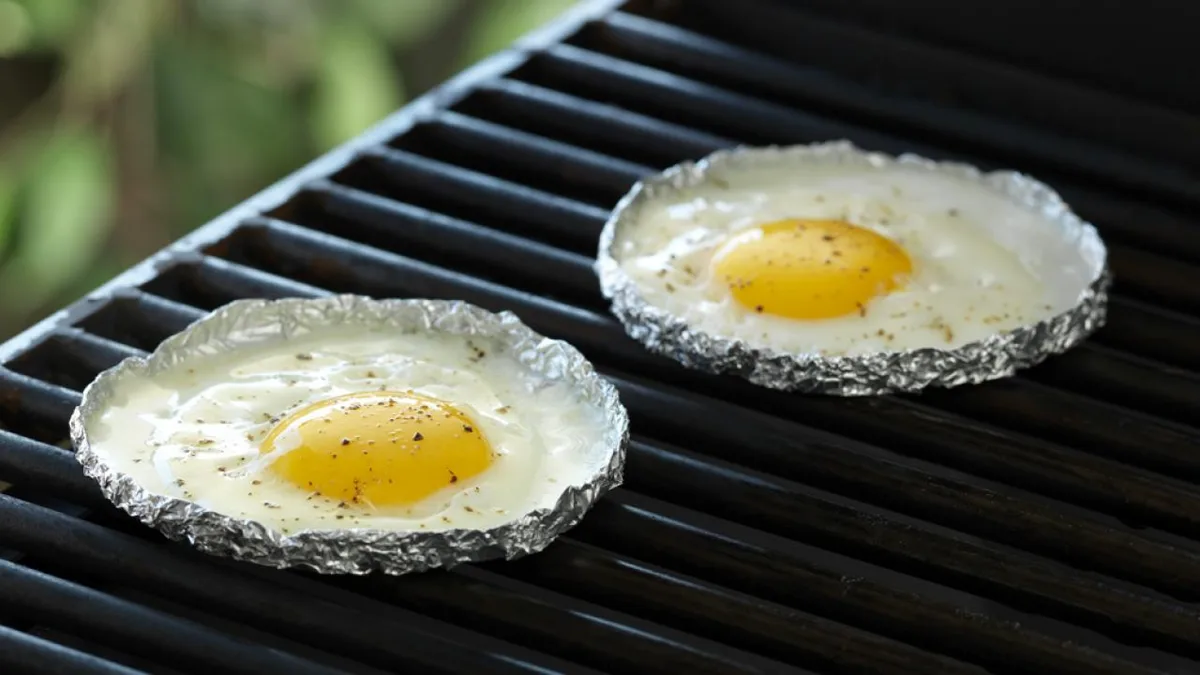
- Fried eggs with crispy edges: go with a cast iron skillet over indirect heat. One to four eggs max.
- Creamy scrambled eggs: use a double-boiler-style setup with a small pan inside a larger aluminum pan. Perfect for two to four people.
- Fluffy scrambled eggs for a crowd: use a large cast iron pan or griddle over low indirect heat. You can do six to twelve eggs at once.
- Baked eggs for a group: grab a muffin tin or a cast iron skillet and treat the grill like an oven. Great for eight or more servings.
- Hard-boiled eggs: use the foil packet method with a little water. This works best when you're already grilling other things and want to multitask.
If you're short on time, fried eggs are the fastest option at around 4 to 6 minutes. For meal prep, baked eggs in a muffin tin give you grab-and-go portions. And if texture matters most, creamy scrambled eggs beat fluffy ones on a grill because the indirect heat prevents them from drying out.
How to Fry Eggs on a Gas Grill — Step by Step

This is the method most people try first, and it's also the most straightforward. Here's exactly how to do it with confidence.
Step 1: The Pan and the Preheat
Place your cast iron skillet on the indirect side of the grill during the preheat. Let it heat for a solid five to seven minutes after the grill reaches temperature. A hot pan is what keeps eggs from sticking.
If you hear a sizzle when you add butter, you're ready.
Step 2: Add the Fat
Butter gives the best flavor, but it burns at around 300°F to 350°F. If your indirect zone runs hotter than that, use a high smoke point oil like canola or avocado, or mix a little oil with the butter. Add enough to coat the pan surface generously.
Step 3: Crack the Eggs
Crack each egg into a small bowl first, then slide it gently into the pan. This prevents shell fragments and lets you check for any bad eggs before they hit the heat. Leave space between eggs so they don't merge into one giant blob.
Step 4: Close the Lid
This is the trick most stovetop cooks miss. Closing the lid traps the heat and steam, which cooks the top of the egg whites without you having to flip. Check after about three minutes.
For sunny-side up with set whites and a runny yolk, aim for four to five minutes total at 300°F to 325°F.
Step 5: Check and Remove
Slide a spatula under the egg. If the white is opaque and firm, it's done. The yolk should still look glossy and slightly jiggly for a runny center.
Remove the pan from the grill immediately to prevent carryover cooking. Season with salt and pepper right after plating.
How to Make Scrambled Eggs on a Gas Grill Without Drying Them Out
Scrambled eggs are where most people go wrong on a grill. The high ambient heat cooks them too fast, leaving a dry, rubbery mess. The fix is low heat and patience.
The Double Boiler Method
This is the easiest way to get creamy scrambled eggs on a gas grill. You'll need a small cast iron or metal mixing bowl that fits inside a larger disposable aluminum pan. Fill the bottom pan with a thin layer of water, then set the bowl on top.
This creates a water bath that keeps the eggs between 200°F and 250°F.
Whisk your eggs with a splash of milk or cream and a pinch of salt. Melt a tablespoon of butter in the bowl, then pour in the eggs. Stir slowly and continuously with a silicone spatula, every 30 seconds or so.
It takes about 10 to 12 minutes for large soft curds to form. The result is silky and rich, nothing like the dry stuff you get from hurried heat.
The Direct Pan Method
If you're making a bigger batch, skip the double boiler and use a large cast iron skillet on low indirect heat. The key is to keep the grill temperature around 250°F to 275°F. Add your eggs and stir every 30 seconds, scraping the bottom as the curds form.
Expect a total time of 8 to 12 minutes depending on how many eggs you're cooking. The lower temperature means you can walk away for a minute without ruining the batch.

Similar Posts



















