Grilled Salmon Temperature: Ideal Heat Guide
If you've ever wondered what temperature should salmon be grilled, you've probably seen answers ranging from 350°F all the way up to 500°F. Those aren't wrong. They're just answering two different questions at the same time.
One number refers to the heat of the grill grate. The other refers to the internal temperature of the fish itself. The USDA sets a safe final internal temperature of 145°F, but working cooks often pull salmon off earlier and let carryover heat finish it.
Here's how to sort through all of that without ruining a good piece of fish.

Why Salmon’s Grill Temperature Is Trickier Than It Seems
Salmon doesn't behave like a steak or a chicken breast on the grill. It's flakier, leaner in some varieties, and much less forgiving when the heat runs high. The fillet's thickness changes everything.
A thin tail-end piece from a wild sockeye will cook in half the time of a thick center-cut farmed Atlantic fillet.
The other wrinkle is carryover cooking. Salmon keeps climbing in temperature after you pull it off the grill. If you wait until the center reaches 145°F, you'll serve a dry, chalky piece of fish.
Most cooks pull it somewhere between 115°F and 135°F depending on the doneness they want.
So the real answer isn't one number. It's a small decision tree based on your salmon, your grill setup, and how you like your fish cooked.
Quick Answer: The Right Surface Heat vs. Pull Temp
Grill salmon over direct heat at 400°F to 450°F. Pull it at 120°F to 125°F for medium-rare. Pull it at 130°F to 135°F for medium.
The USDA Food Safety and Inspection Service says fish must reach 145°F. At that internal temp, salmon will be well done. Let carryover finish the last 5 to 10 degrees.
That's the short version. The long version matters if you want crispy skin, a moist center, and no white albumin oozing out of the surface.
Two Temperatures Every Salmon Cook Needs to Know
You're managing two separate temperatures at the same time. The first is the surface temperature of your grill grates. The second is the internal temperature of the thickest part of the salmon fillet.
The surface temp sets the pace for browning, crisping, and developing those grill marks. The internal temp tells you when the fish is done. If you only track one, you'll miss the other.
Here's how the internal pull temps map to final doneness after the fish rests.
| Doneness Level | Internal Pull Temp | Final Temp After Rest | Texture |
|---|---|---|---|
| Medium-rare | 115°F to 120°F | 125°F to 130°F | Tender, slightly translucent center |
| Medium | 125°F to 130°F | 135°F to 140°F | Moist, lightly flaking |
| Well done | 140°F to 145°F | 150°F+ | Firm, fully opaque, drier |

Most home cooks do best aiming for medium. It gives you a little buffer. The center stays moist, the outside gets a nice crust, and you don't end up with a dry fillet that nobody wants to eat.
Carryover cooking is real. A thick fillet will rise another 5 to 10 degrees after you move it to a plate. So always pull it a little early, never a little late.
How Salmon Type and Thickness Change the Doneness Math
Here's the part most grilling guides skip. Your salmon type changes the thickness, fat content, and cooking speed. That changes the temperature target, even when the grill stays the same.
Wild sockeye and coho are thinner and leaner than farmed Atlantic salmon. They cook fast. They dry out fast.
You have less room for error with a skinny sockeye fillet. Farmed Atlantic salmon has more fat and usually comes in thicker cuts. It holds moisture better and gives you more time.
King or chinook salmon is another animal entirely. It's thick, fatty, and forgiving on the grill. You can leave it over heat a little longer without wrecking it.

Thickness matters just as much as species. A 1/2-inch tail piece cooks dramatically faster than a 1-1/2-inch center cut. If your fillet tapers thin at one end, that thin part will overcook before the thick center reaches your target.
Here's a rough doneness guide based on what you're cooking.
- 1/2-inch wild sockeye tail piece: about 2 to 3 minutes per side over direct heat at 400°F
- 1-inch center-cut farmed Atlantic fillet: about 4 to 5 minutes per side
- 1-1/2-inch thick king salmon steak: about 6 to 8 minutes per side
Those times assume you're cooking over direct medium-high heat with the lid closed. They'll shift a little depending on your grill and how hot the grates actually get.
Grill Setup That Actually Works: Direct vs. Indirect Heat
A two-zone fire is your best friend here. You want one side of the grill screaming hot for direct heat and the other side with low or no direct flame underneath. That gives you an escape route if the exterior browns too fast before the center is done.
On a gas grill, set one burner to high and leave the adjacent burner off or on low. On a charcoal grill, bank the hot coals to one side. This gives you a hot zone and a cooler zone.
Aim for a grate surface temperature of about 400°F to 450°F. You can test that by holding your hand four inches above the grate. If you can only keep it there for 4 to 5 seconds, you're in the right zone.
The setup order matters.
- Preheat the grill with the lid closed for 10 to 15 minutes.
- Scrub the grates clean with a grill brush.
- Oil the grates or brush oil directly onto the salmon skin.
- Place the salmon skin-side down over the hot side.
- Close the lid and let it cook for the first few minutes.
Closing the lid traps heat and helps the top of the fish cook through gently. This is especially important for thicker fillets. If you leave the lid open the whole time, you'll get a burnt outside and a raw middle.
If the salmon starts darkening too fast, move it to the cooler side of the grill. That's why the two-zone setup exists. It gives you control when the fire runs hotter than expected.
You'll also want to avoid moving the fish too early. Salmon sticks when it hits a hot grate, then releases naturally after a few minutes. If you try to flip it at the first sign of resistance, it tears.
Leave it alone until the skin releases cleanly. That's usually after 3 to 4 minutes over direct heat.
Step-by-Step: Grilling Salmon to Your Target Doneness
Follow this sequence once your grill is set up with a two-zone fire. The steps work for gas, charcoal, and pellet grills, though the heat source changes the fine-tuning slightly.
- Pat the salmon dry with paper towels. Wet skin won't crisp and wet flesh steams instead of sears.
- Brush a thin layer of neutral oil over the flesh and the skin side too if the fish is skinless.
- Season the flesh with kosher salt, black pepper, and any dry rub or spice blend. Do this right before grilling.
- Place the fillet skin-side down on the hot side of the grate. Lay it away from you so any oil splash moves forward.
- Close the lid and cook for 3 to 5 minutes, depending on thickness. Don't poke or slide the fish during this window.
- Test release by gently lifting a corner with a fish spatula. If the skin sticks, wait another 30 to 60 seconds.
- Flip once. Use a wide fish spatula and support the whole fillet.
- Cook the flesh side for 1 to 3 minutes less than the skin side. The residual heat already traveled through the fish.
- Check the internal temp in the thickest part. Pull at your chosen number from the doneness branches below.
- Rest for 3 to 5 minutes on a clean plate. The temp will climb 5 to 10 degrees.
For a 1-inch center-cut fillet over 400°F to 450°F direct heat, the whole process takes about 8 to 10 minutes total. Thin tail pieces cook faster. Thick king salmon steaks take longer.
Doneness Branches: From Medium-Rare to Well Done
Your target pull temp depends on what you want on the fork. Use this decision guide to match the reading to the result.
If you want a soft, buttery, slightly translucent center, aim for 115°F to 120°F internal before resting. This is medium-rare. Most sushi-grade or very fresh farmed Atlantic salmon can handle this.
People who love delicate fish prefer this range.
If you want a moist center that flakes but still holds gloss, pull at 125°F to 130°F. This lands at medium after carryover. It's the sweet spot for most home cooks.
The fish stays juicy and the texture reads as properly cooked to most guests.
If you want fully opaque, firm, flaky salmon, pull at 135°F to 140°F. After rest it reaches well done. This is the only safe choice for pregnant women, older adults, or anyone with a compromised immune system, per FoodSafety.gov.
It will be drier than medium, but no one gets sick.
The white albumin that sometimes appears on the surface is a protein called albumin. It coagulates and squeezes out as the muscle fibers tighten, usually above 140°F. If you see a lot of it, the fish went past medium.
Lower heat and an earlier pull reduce the ooze.
One practical note. Wild sockeye is so lean that medium-rare often tastes better than medium. Farmed Atlantic salmon has enough fat to carry medium or even medium-well without turning chalky.
Match the doneness to the fish, not just the habit.
Cedar Plank, Foil, and Other Alternative Grilling Methods
Direct grate grilling gives you the best skin and char. But three alternative methods solve specific problems.
A cedar plank gives you gentle indirect heat, smoky aroma, and zero sticking. Soak the plank in water for at least 30 minutes first. Place it on the hot side of the grill until it starts to smoke and lightly char, maybe 3 to 4 minutes.
Then set the salmon skin-side down on the plank and close the lid.
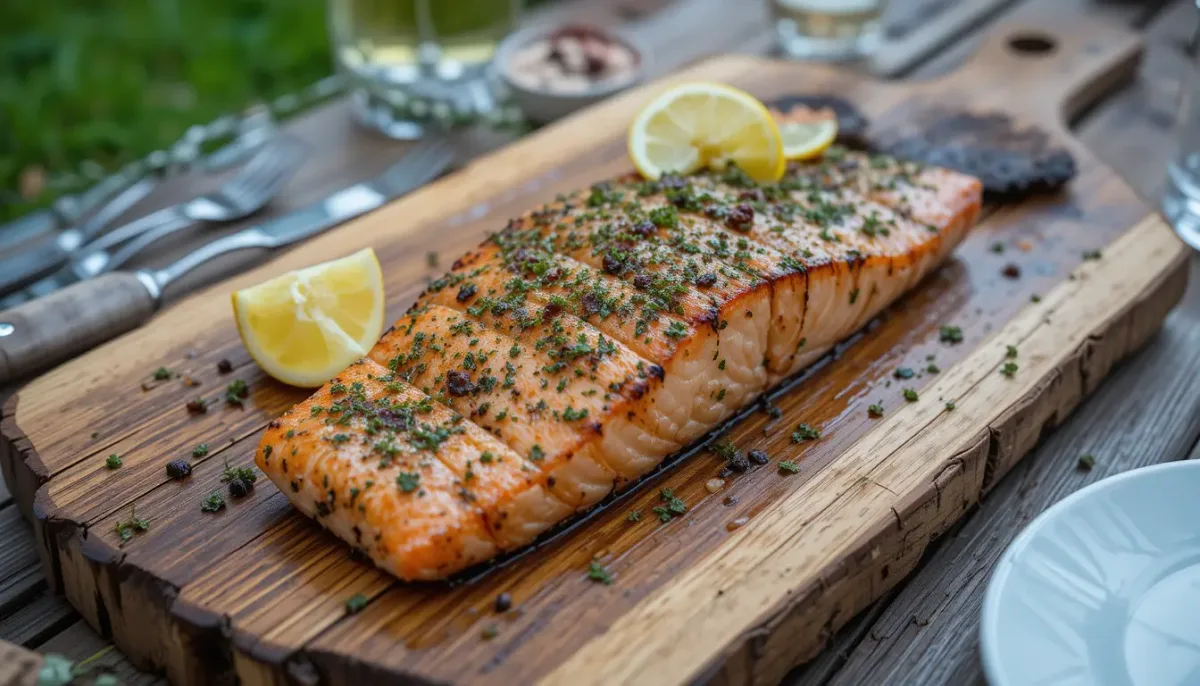
The plank acts as a buffer. Surface temp drops below direct grate heat, so the fish cooks more gently. That means a 1-inch fillet may take 10 to 14 minutes total instead of 8 to 10.
Check the internal temp rather than trusting time.
Foil packet grilling is the most forgiving method. Place the seasoned fillet on a sheet of heavy-duty aluminum foil, fold up the edges loosely, and set it over indirect heat. The steam keeps everything moist.
You lose the sear, but you can't really overcook it badly if you watch the temperature. This works well for thin wild fillets.
A grill basket gives you the convenience of direct heat without the sticking problem. Oil the basket lightly, lay in the salmon, and flip the entire basket instead of wrestling a fragile fillet. Skinless salmon does especially well here.
Keep the same 400°F to 450°F surface temp and the same internal pull targets.
If you want grill marks and crispy skin, direct grate is still the winner. The other methods trade some texture for easier handling and less risk.
Common Salmon Grilling Mistakes That Ruin Dinner
Most ruined salmon comes from a handful of repeating errors. Fix these and you fix the meal.
The biggest one is overcooking without a thermometer. People guess by time. Thickness, grill hotspots, and outside temperature change the math.
Use an instant-read thermometer every time.
Flipping too early is another classic. Salmon releases from hot grates on its own after the proteins set. If you force it, the skin tears and the fillet falls apart.
Wait for the release.
Not patting the fish dry creates steam. Steam fights the sear and makes the surface pale and soft instead of browned. Dry skin equals crisp skin.
Cooking a tapered fillet evenly is nearly impossible on a flat grate. The thin tail overcooks while the thick center is still raw. Tuck the thin tail under itself or fold it over to even out the thickness.
Or cut the fillet into two pieces and cook them separately.
Flare-ups from oil dripping onto burners or coals can torch the skin. Use just enough oil to coat the surface, not enough to drip. Keep a cool zone ready and move the fish if flames shoot up.
Finally, serving immediately without rest makes the fish weep juice and taste dry. Rest it 3 to 5 minutes. Carryover cooking does the rest.
Pro Tips for Crispy Skin and Moist Flesh
Crispy skin and moist flesh aren't opposites. You get both by controlling heat and moisture.
Start with very dry skin. Pat it aggressively with paper towels. Some cooks even leave the salmon uncovered in the fridge for an hour before grilling to dry the skin further.
Use a cast iron grate or a well-cleaned grate. A clean, hot, lightly oiled surface releases salmon far better than a dirty grate with burnt residue.
Oil the fish, not the grates. Brushing oil on the salmon skin prevents sticking without creating a slick, smoking mess across the whole grill. A thin layer is enough.
Keep the skin side down for most of the cooking time. That gives the skin a full sear while the flesh gently steams from above. Flip only for the last minute or two to kiss the flesh side with heat.
If you want extra insurance, dry brine the salmon for 30 minutes before grilling. Salt the flesh lightly and let it sit. The salt firms the surface and seasons the interior.
Rinse and pat dry before oiling and grilling.
For glazes and marinades with sugar, add them late. Sugar burns fast over high heat. Brush a maple or honey glaze only in the final 2 minutes, then move the fish to the cooler side if it starts to blacken.
Resting before serving matters as much as the pull temp. Let the salmon sit 3 to 5 minutes so the fibers relax and the juices redistribute. It won't cool down enough to matter, but it will taste noticeably juicier.
Food Safety and Carryover: What’s Safe, What’s Not
The USDA considers fish safe at an internal temperature of 145°F. That's the fully cooked standard. But carryover cooking means the salmon can hit that number after you pull it early and let it rest.
If you pull the fish at 135°F, the center will climb to roughly 140°F or 145°F during the rest. That meets the USDA mark for well done. For most healthy adults, pulling at 125°F to 130°F for medium is widely accepted in practice, though it won't reach 145°F.
Pregnant women, older adults, young children, and anyone with a weakened immune system should only eat salmon cooked to a full 145°F final temperature. No exceptions. That means pulling at 140°F and resting.
Handle raw salmon carefully. Keep it refrigerated until you're ready to grill. Use separate tongs and spatulas for raw and cooked fish.
Leftovers go in the fridge within 2 hours and stay good for 3 to 4 days.
FAQs: Salmon Grill Temperature Questions Answered
What temperature should grilled salmon be when done?
For medium doneness, pull the salmon at 125°F to 130°F internal and let it rest. Carryover will bring it to 135°F to 140°F. For fully cooked, reach 145°F.
Check the thickest part with an instant-read thermometer.
Can you eat salmon at 125°F?
Yes, for most healthy adults. At 125°F, the salmon is medium-rare to medium and still moist. It's below the USDA's 145°F fully cooked mark, so it's not recommended for pregnant women, children, older adults, or anyone immunocompromised.
Do you grill salmon skin side down first?
Yes. Place the fillet skin side down on the hot grate and leave it for 3 to 5 minutes. The skin crisps and releases naturally.
Flip once for the last 1 to 3 minutes to finish the flesh side.
How long do you grill salmon at 400°F?
A 1-inch center-cut fillet takes about 4 to 5 minutes per side at 400°F, so 8 to 10 minutes total. Thinner wild sockeye cooks faster. Thicker king salmon steaks take 12 to 16 minutes.
Use temperature, not time.
Final Decision Guide: Match Your Doneness to the Pull Temp
Here's the whole decision tree in one pass.
If you want soft, buttery, slightly translucent salmon, pull at 120°F. That's medium-rare.
If you want moist, flaking salmon that most guests will love, pull at 125°F to 130°F. That's medium.
If you need fully cooked salmon for safety reasons, pull at 140°F and let it rest to 145°F.
Keep the grill surface at 400°F to 450°F over direct heat. Use a two-zone fire for control. Rest the fish 3 to 5 minutes before serving.
Check the internal temp in the thickest part every time. That's the entire system.

Similar Posts



















