Grill Size Guide: Find the Perfect Fit
Buying a new grill feels exciting until you're staring at a wall of stainless steel and wondering if a 2-burner is too small or a 6-burner is overkill. Getting it wrong means either cooking in batches for every gathering or wasting fuel and deck space on burners you rarely touch. That's why learning how to choose the correct grill size matters more than picking the shiniest model on the lot.
Here's the reality: most grills are sold based on total square inches, but that number includes warming racks and secondary zones you'll rarely use. What actually matters is the primary cooking surface, the space where food touches the grates. Manufacturer specifications indicate that a typical 3-burner gas grill offers around 450 to 500 square inches of primary space, which comfortably handles four to six burgers at once.
As of 2026, that's still the sweet spot for most households, but your situation might point elsewhere. Let's walk through the process so you land on the right size the first time.
Quick Answer
Choose a grill with 400 to 500 square inches of primary cooking surface for a family of four. Add roughly 50 square inches per additional person. Measure your patio or deck first, then match the footprint, not just the grate size.
Check your local fire codes before buying anything.
The Real Problem: Why Grill Size Confuses Everyone
Walk into any big-box store and you'll see gas grills ranging from tiny tabletop units to massive 8-burner behemoths. The pricing overlaps, the marketing language blurs together, and every box claims it's perfect for "family gatherings." No wonder people guess wrong.
The confusion starts with how manufacturers advertise grill size. Most list "total square inches," which adds the primary cooking grates, the warming rack, and sometimes even the side burner into one impressive number. A grill with 650 total square inches might only have 420 inches of actual grilling space.
That's a massive difference when you're trying to fit eight chicken breasts without crowding.
The second problem is the belief that bigger is automatically better. That logic fails for two reasons. First, larger grills need more fuel to heat up and maintain temperature.
Second, they take up valuable real estate on your deck or balcony, often leaving you with less usable outdoor space than you had before.
The real cost of guessing wrong shows up in everyday cooking. An oversized grill means longer preheat times and wasted propane on nights when you're just cooking two steaks. An undersized grill means food stacked in batches, cold servings, and stress when friends come over.
Neither scenario makes grilling fun.
So how do you break the cycle? Start by ignoring the total square inch number on the box and focusing on three things: the primary cooking surface, the physical footprint, and how many people you actually cook for. Those three factors answer the question better than any marketing claim.
How Much Cooking Space Do You Really Need?
The most common rule floating around the internet is "100 square inches per person." That's not wrong, but it's also not complete. That guideline assumes you're cooking everything at once, which rarely happens. Most people grill in batches, keep food warm in the oven, or use a two-zone setup where half the grill runs hot and the other half stays cool.
A better starting point: count the maximum number of people you cook for at one time, not your household size. If you're a family of four but you host a barbecue twice a summer for twelve people, you need a grill that handles twelve guests, not four.
Here's a practical breakdown for primary cooking surface:
- Two people, occasional grilling: 300 to 400 square inches
- Family of three to four, weekly use: 400 to 500 square inches
- Family of five to six, frequent entertaining: 500 to 600 square inches
- Seven or more, regular gatherings: 600 to 750 square inches
These numbers assume you're cooking standard items like burgers, chicken breasts, and steaks. If you regularly cook whole turkeys or large briskets, you need to think about vertical space too. A 22-inch kettle grill might have enough surface area, but a 15-pound turkey won't fit under the lid.
For burgers specifically, a 450-square-inch grate fits about eight standard patties without overcrowding. That's the magic number for most families. If you like to cook vegetables alongside the meat, add another 50 to 100 square inches for the veggie tray.
The most honest approach: think about your busiest cookout in the past year. How many people showed up? What did you cook?
If that event felt cramped on your old grill, size up. If you never used all the burners, size down.
Understanding Grill Surface: Primary vs. Total vs. Warming Rack
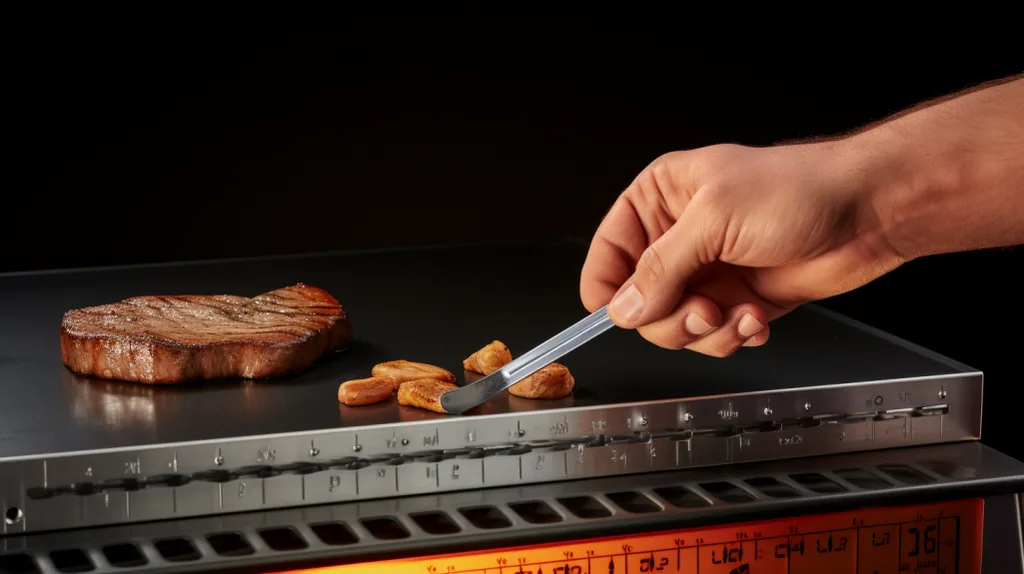
When you look at a grill's spec sheet, you'll see two or three different square inch figures. Understanding which number matters is the difference between buying the right grill and overspending on a marketing trick.
Primary cooking surface is the space where the main grates sit. This is where your burgers, steaks, and chicken actually cook. It's the only number that matters for sizing.
Manufacturers measure this by calculating the area over the burners or charcoal bed, and it's always smaller than the total.
Total cooking surface adds the primary grates plus the warming rack. Some brands also throw in the side burner surface to inflate the number further. A grill with 650 total square inches might only have 420 inches of primary space.
Always check the fine print to see what's included.
Warming rack space is exactly what it sounds like. It's a secondary rack above the main grates, useful for keeping buns warm or holding cooked food without overcooking. But you can't grill on it.
The surface is usually thinner metal that doesn't conduct heat evenly, and food placed there slowly dries out. Counting it as grill space is optimistic.
The clearest way to see what you're getting: measure the primary grate yourself. Take a tape measure to the store and check the actual cooking surface. It takes thirty seconds and removes all the guesswork from the marketing language.
For reference, a standard 3-burner gas grill typically has a primary surface between 420 and 500 square inches. A 4-burner jumps to 550 to 650. The difference between those two sizes is about four burger patties per batch.
That's the real trade-off when you're deciding.
The Space Check: Measuring Where Your Grill Lives

Before you fall in love with a grill, measure the spot where it's going to live. The cooking surface matters, but the physical footprint determines whether the grill fits at all. Nothing kills a purchase faster than a grill that blocks your door or crowds your patio furniture.
Start with the basic dimensions. Measure the width, depth, and height of the space you've designated. Most full-size gas grills run 48 to 60 inches wide, 24 to 30 inches deep, and 45 to 55 inches tall with the lid closed.
Portable grills are obviously smaller, but they have their own footprint quirks.
Don't forget clearance. The National Fire Protection Association recommends keeping grills at least 10 feet from structures, which includes your house, garage, and deck railings. Some local codes are stricter, especially for apartment balconies where any flame source might be banned entirely.
Check your local regulations before purchasing, not after.
The lid test matters just as much as the footprint. Open the grill lid and measure how high it swings. Many grills with folded side shelves need extra room on either side to open fully.
If your grill sits against a wall, those shelves might not deploy at all.
Storage is the silent killer. That giant 6-burner grill needs a cover, and the cover adds bulk. Do you have space in the garage or shed during winter?
Can you fit the propane tank plus a spare? Measure twice, buy once. It sounds like a cliché, but grill buyers constantly skip this step and regret it.
Fuel Type Changes Your Size Needs
Gas, charcoal, and pellet grills all handle sizing differently. The cooking surface matters across all three, but each fuel type brings its own spatial constraints and heating characteristics.
Gas grills are the most straightforward. Burner count roughly tracks cooking surface, and you can match your size needs directly to the square inch numbers. But BTU output varies wildly between brands, and a high BTU rating doesn't automatically mean better grilling.
Per industry testing, the real factor is heat distribution across the primary grates. Look for even burner spacing rather than sheer power.
Charcoal grills are different. A 22-inch kettle grill offers about 360 square inches of primary surface, and that handles four people comfortably. But charcoal grills cook differently.
You get a hot zone and a cool zone, so the effective cooking area is less than the grate size suggests. For indirect cooking, you're using half the surface. If you're a charcoal purist who smokes brisket, you need a bigger grill than the surface math initially suggests.
Pellet grills bring hopper size into the equation. The cooking surface is usually generous, often 600 square inches or more. But the hopper capacity determines how long you can run the grill without refueling.
A 20-pound hopper might last six to twelve hours depending on temperature. If you're smoking overnight, that matters more than surface area.
Electric grills are the space-savers. They're perfect for balconies and small patios where gas is banned. The trade-off is limited heat output and smaller surface areas, typically topping out around 250 square inches.
That works for two people but struggles with family gatherings.
Your fuel choice might already be decided by your living situation. Apartments and condos often restrict charcoal and gas, pushing you toward electric. Houses with natural gas hookups can skip propane tanks entirely.
Know your constraints before you fixate on any single size.

Similar Posts



















