Cast Iron on a Gas Grill: Yes, Here’s How
You can use a cast iron pan on a gas grill. It’s one of the best ways to get steakhouse-level sears without filling your kitchen with smoke. The short answer depends on what kind of cast iron you own and how you manage the heat.
Manufacturer specifications for bare cast iron, such as Lodge skillets, rate the iron itself safe well past 700°F. But the seasoning layer starts breaking down around 450°F to 500°F sustained. That gap is where most grill mistakes happen.
Below, we’ll walk through exactly which pans work, how hot is too hot, and how to set up your gas grill so the pan heats evenly instead of turning into a smoke bomb.
Quick Answer
Yes, you can use a cast iron pan on a gas grill. Bare cast iron handles high heat well. Enameled cast iron needs more care.
Keep most cooking between 400°F and 500°F. Preheat slowly. Use direct heat for searing.
Use indirect heat for baking. Too much direct heat can damage seasoning or enamel.
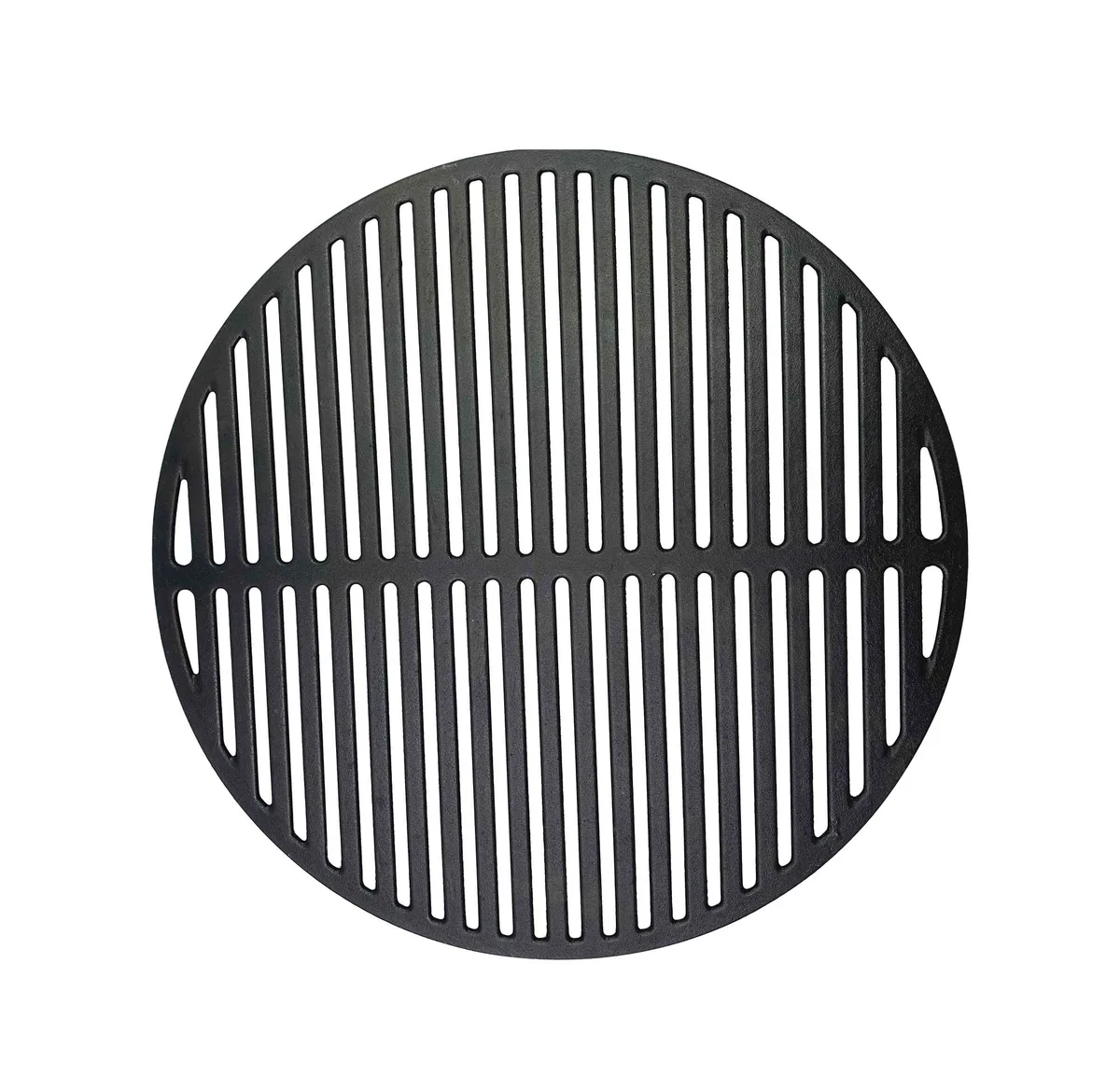
The Two Cast Iron Types That Change Everything: Bare vs. Enameled on a Gas Grill
The first decision isn’t about your grill. It’s about what’s inside your cabinet. Bare cast iron and enameled cast iron behave very differently on a gas grill.
Knowing which one you have changes every step after this.
Bare cast iron is raw iron with a polymerized oil coating called seasoning. It’s the black, slightly rough skillet you can scrape with metal. It loves high heat.
You can throw it on a ripping-hot gas grill, sear a steak, and not worry about the iron itself. The seasoning, though, is the weak point.
Enameled cast iron is coated in a glass-like porcelain enamel. Le Creuset and Staub are the big names, but Lodge makes an affordable enameled line too. The enamel looks beautiful and resists acidic foods, but it has a hard temperature ceiling.
Le Creuset documentation states their enameled cast iron should not exceed 500°F. Staub gives the same 500°F limit for their enameled pieces. Go hotter and you risk cracking, crazing, or permanently discoloring the enamel.
If you have both, use bare cast iron for high-heat grill work. Reserve enameled cast iron for lower, steadier heat.
| Cast Iron Type | Max Safe Iron Temp | Max Safe Coating Temp | Best Grill Use |
|---|---|---|---|
| Bare cast iron | 700°F+ | Seasoning degrades around 450°F to 500°F | Searing, smash burgers, high-heat roasting |
| Enameled cast iron | 700°F+ | 500°F per Le Creuset and Staub | Baking, braising, moderate roasting |
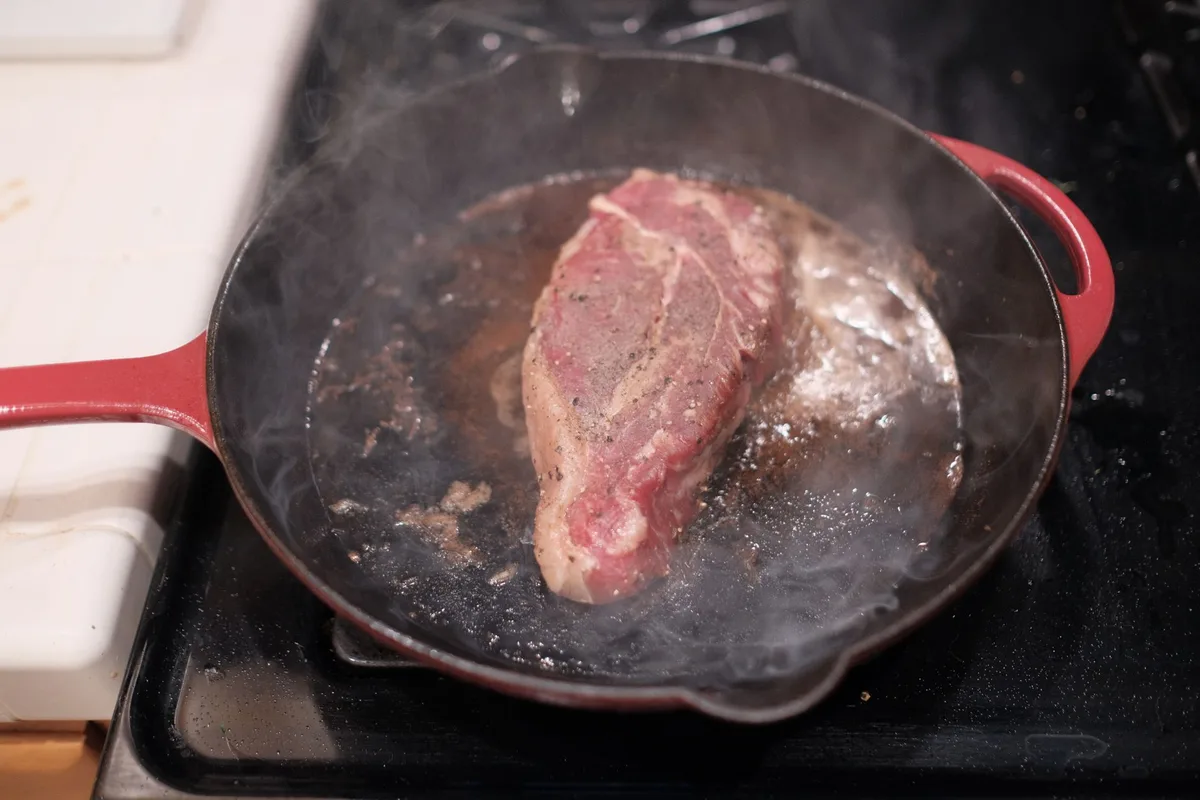
Know Your Gas Grill’s Hot Zones Before the Pan Goes On
A gas grill doesn’t heat a pan the way a stove burner does. On a stove, the flame sits directly under the center of the skillet. On a gas grill, heat comes from multiple burners spread across a wider area.
The result is a pan with hot spots and cool edges unless you manage the zones.
Most gas grills have at least two burners. Larger grills have three or four. That gives you one big advantage: you can create separate heat zones.
Call it two-zone cooking if you want the standard term. One side runs hot with direct flame under the pan. The other side stays cooler with the burner off or set low.
Why does this matter for cast iron? Because cast iron is a poor conductor of heat. It holds heat extremely well once hot, but it heats unevenly.
Put a cold 12-inch skillet over a single small burner and the center will scorch while the edges stay almost cool. Spread the pan over two burners or rotate it during preheating and the whole surface comes up to temperature more evenly.
Also check how far apart your grill grates sit. Wide spacing on some grills can make a smaller skillet feel unstable. A 10-inch or 12-inch pan usually spans enough space to sit securely, but it’s worth a quick look before you commit.
Preheating a Cast Iron Skillet on a Gas Grill Without Ruining It
Preheating is where most people ruin their pan or their cook. The fix is straightforward. Heat the pan slowly, not fast.
Start with the skillet on the cold grates. Light the grill and set the burner under the pan to medium or medium-low. Close the lid.
Let the pan come up to temperature over 10 to 15 minutes. This slow rise lets the heat spread through the iron instead of shocking one spot.
For bare cast iron, rub a thin layer of high-smoke-point oil on the cooking surface before preheating. Avocado oil works well because its smoke point is around 520°F. Grapeseed oil sits near 420°F and canola near 400°F.
The oil layer helps refresh the seasoning and shows you when the pan is hot enough.

An infrared surface thermometer removes the guesswork. Aim for 400°F to 450°F for most searing with bare iron. For enameled cast iron, don’t let the surface pass 450°F if you can avoid it.
That leaves a buffer below the 500°F enamel limit.
Rotate the pan 180 degrees halfway through preheating. Even with multiple burners, gas grills often have slight hot spots near the back or sides. Rotating evens that out.
Direct Heat vs. Indirect Heat: Choosing the Right Zone for Your Meal
The zone you use changes the final result more than the pan itself does. Here’s the simple version.
Use direct heat when you want a hard sear, a crisp crust, or fast cooking. That means the pan sits directly over a lit burner. Steaks, smash burgers, and vegetables that need char all do well here.
Use indirect heat when you want gentle, oven-like cooking. That means the pan sits over a burner that’s off or very low. Baking cornbread, roasting a whole chicken in a deep skillet, or finishing a thick steak without burning the outside all benefit from indirect heat.
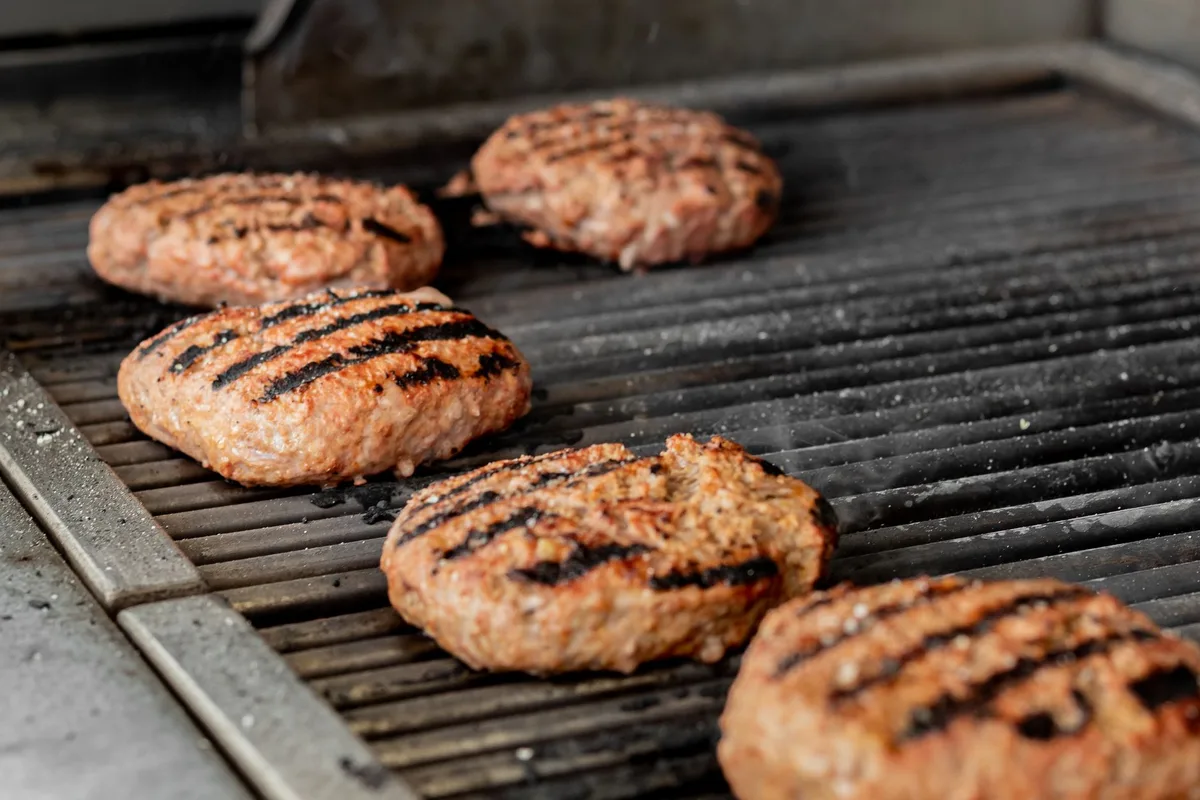
The smart move is to combine both. Sear over direct heat first, then slide the pan to the indirect side. That’s how you get a deep crust on a thick-cut steak without overcooking the center.
The pan’s heat retention does the rest.
Step-by-Step: Searing Steaks and Smash Burgers in a Bare Cast Iron Skillet
Searing is the most common reason people put cast iron on a gas grill. The goal is simple: high heat, fast crust, minimal smoke inside the house.
Before you start, bring the steak to room temperature and pat it dry. Moisture is the enemy of a good sear. Moisture on the surface steams the meat instead of browning it.
Here’s the flow that works reliably in our research.
- Place the bare cast iron skillet on the cold grill grates over the direct heat burner.
- Light the grill and set that burner to medium or medium-high. Close the lid.
- Let the pan preheat for 10 to 15 minutes. Check the surface with an infrared thermometer until it reads around 400°F to 450°F.
- Add a small amount of high-smoke-point oil to the pan. Tilt it to coat the surface.
- Lay the steak or burger patties in the pan away from you. Leave space between pieces.
- Don’t move the meat for 2 to 4 minutes. A hard sear releases naturally once it forms.
- Flip and sear the second side. For smash burgers, press once firmly right after the burger hits the pan.
- If the pan gets too hot, slide it to the indirect side and close the lid to finish cooking gently.
The hot spots on a gas grill mean the area directly over the burner flame will sear faster. Rotate the pan or reposition food if you notice uneven browning.
Don’t crank every burner to high and walk away. That’s how seasoning smokes off and the pan turns from black to gray in one afternoon. Medium-high direct heat is plenty for cast iron.
The pan holds so much heat that it doesn’t need to be glowing red to sear well.
Step-by-Step: Baking and Roasting in Cast Iron Using the Grill as an Oven
Cast iron turns a gas grill into a surprisingly effective outdoor oven. The key is treating the grill like an oven, meaning lid down and steady indirect heat.
For baking cornbread, preheat the skillet on the indirect side. Light only one burner or set two burners to low if you need more ambient heat. Place the pan over the unlit burner.
Close the lid and bring the grill air temperature to around 400°F. Use the lid thermometer as a rough guide, but remember it reads air temperature, not pan temperature.
When the pan is evenly warm, pour in the batter and close the lid. Bake until the edges pull away and a toothpick comes out clean. Cast iron cornbread on a grill picks up a subtle smoky edge you can’t get from an indoor oven, especially if you preheated the skillet with a little butter or bacon fat.
Roasting works the same way. A whole chicken or a deep dish of potatoes sits in the pan over indirect heat. The surrounding hot air does the work.
Check the internal temperature of meats with a probe thermometer to be safe. The USDA advises cooking poultry to an internal temperature of 165°F.
As of 2026, more grill owners are using cast iron as a poor man’s outdoor oven, especially in summer when running a kitchen oven makes the AC work harder. It’s a legitimate use case, not a gimmick. Just keep the lid closed and check less often.
Every time you lift the lid, you lose heat and add minutes to the cook.
Enameled Cast Iron Temperature Limits and Safety Cutoffs
Enameled cast iron has a hard ceiling. Le Creuset and Staub both state their enameled cookware should not exceed 500°F. Go past that and the enamel can craze, discolor, or crack.
It also can't handle rapid temperature swings.
Thermal shock is the bigger risk on a gas grill. Placing a cold enameled skillet over a glowing burner creates uneven expansion. The iron core expands faster than the glass-like coating.
That's how hairline cracks start.
Keep enameled pans below 450°F on the surface. Use medium or medium-low heat. Never preheat an empty enameled skillet on high.
Add oil or food soon after the pan warms up. Lift the pan with dry heat-resistant mitts only.
If you see white spiderweb lines on the enamel, the pan has overheated. It may still work for low-heat baking. It is no longer safe for high-heat searing.
Treat it as a low-heat baking vessel from that point forward.
Gas Grill Setup Tweaks That Prevent Hot Spots, Slipping, and Flare-Ups
A few small adjustments make the difference between an even sear and a scorched mess. Start with burner placement. Center the skillet over two burners if possible.
That spreads the flame pattern wider than a single burner can.
Check your grate spacing before adding food. A 10-inch skillet on widely spaced grates can tip when you move food around. A 12-inch skillet usually sits stable.
If the pan wobbles, add a dedicated cast iron griddle plate or heavy-duty grill grates rated for high heat.
Flare-ups are less common with a skillet than with open grates. But rendered fat and oil can still drip over the sides. Keep excess oil to a minimum.
Slide the pan away from flame before flipping fatty cuts. A small drip pan on the indirect side catches overflow.
Wind is the hidden variable. A gusty day steals heat unevenly. Close the grill lid to stabilize temperatures.
If your grill has a rotisserie burner or infrared sear zone, don't use it under a skillet. Those outputs run far hotter than standard burners and will strip seasoning fast.
Common Mistakes That Seasoning, Cracking, and Handle Burns Start With
Most cast iron grill failures come from moving too fast. Here are the repeat offenders we see in aggregate user reviews and manufacturer support threads.
- Cranking every burner to high. A gas grill can hit 700°F. That smokes off seasoning in minutes and leaves bare gray iron.
- Preheating an empty enameled skillet on high. The enamel can craze before the pan even warms up.
- Adding cold liquid to a screaming hot pan. This is thermal shock. It can warp bare iron or crack enamel.
- Grabbing the handle without a mitt. Cast iron handles stay hot for a long time. On a grill, everything around the pan is hot too.
- Using soap every time on bare iron. Modern mild soap won't destroy a mature seasoning, but harsh detergents and hard scrubbing can. Rinse and re-oil instead.
- Leaving the grill alone with oil in the pan. Oil smoke can ignite if the surface passes its flash point. Stay nearby.
Cleaning and Re-seasoning Bare Cast Iron After Grill Use
Let the skillet cool until you can handle it without heavy gloves. Some cooks clean it while warm. Either way, avoid plunging a hot pan into cold water.
That warps the iron.
Scrape out stuck bits with a chainmail scrubber or coarse salt. Add a little warm water, scrub, then dry immediately with a towel. Some people skip water entirely and just wipe while the pan is still warm.
That works too.
After cleaning, apply a thin coat of neutral oil. Rub it over the entire surface, including the handle and bottom. Place the pan back on a low grill for five minutes.
This polymerizes a fresh micro-layer of seasoning.
Humid or coastal climates make rust more likely. Store the pan somewhere dry and ventilated. Never store it with the lid on unless you slide a paper towel inside to absorb moisture.
A lint-free cloth between the lid and pan works just as well.
Safety and Fire Prevention When a Hot Skillet Meets Gas Burners
The NFPA publishes outdoor grilling safety guidance that applies here. Keep the grill at least three feet from siding, deck rails, and overhanging branches. Never use a grill on a covered porch without proper clearance.
Stay near the grill whenever the pan is over direct heat. A skillet full of oil can reach its flash point quickly. If you see wisps of smoke, that's normal.
If you see rolling smoke with a blue tint, turn off the burner and move the pan to the indirect side carefully.
Keep a fire extinguisher rated for grease fires within reach. Baking soda also works for small flare-ups. Never throw water on a grease fire.
That spreads burning oil.
Let the pan and grill cool before you move anything indoors. Place the hot skillet on a heat-safe trivet, not a wooden cutting board or plastic surface. A folded towel can melt under a 400°F skillet, so use a metal or silicone trivet instead.
## Question
Cast Iron vs. Carbon Steel vs. Direct Grill Grates: When Each Wins
Carbon steel is cast iron’s leaner cousin. It heats faster and weighs less. But it has less thermal mass, so temperature dips more when cold food hits it.
Cast iron wins for thick steaks and long, steady heat. Carbon steel wins for quick stir-fries and light weight.
Direct grill grates work fine for burgers, chops, and vegetables that don't fall through. A skillet earns its place when you need a flat surface, pan sauce, or contained oil. Small items like shrimp or diced onions are easier in a skillet.
If flare-ups are a problem, a skillet contains most of the fat. That alone makes it worth using for fatty cuts.
Quick Decision Guide: Which Cast Iron, Which Heat Zone, and When
Here's the short version.
- High-heat searing: bare cast iron, direct heat, 400°F to 450°F surface.
- Baking or braising: enameled or bare cast iron, indirect heat, 400°F air temp.
- Smash burgers: bare cast iron, direct heat, medium-high flame.
- Finishing thick cuts: sear on direct, then slide to indirect with lid closed.
- Acidic sauces after searing: use enameled, not bare. Acid strips seasoning.
- Quick veggie sauté: bare cast iron, medium direct heat, stir often.
If you only have one pan, choose bare cast iron. It handles the widest range on a gas grill.
Frequently Asked Questions
Can I use a Le Creuset skillet on a gas grill?
Yes, but keep the surface below 500°F. Use medium or medium-low heat and avoid empty preheating on high. Thermal shock and overheating are the two main ways enamel fails on a grill.
Will my cast iron skillet warp on a gas grill?
Warping is rare with cast iron. It cracks more easily than it warps. The main risk is thermal shock from adding cold water to a hot pan or placing a cold pan over an already roaring burner.
Do I need to season cast iron after using it on a gas grill?
Yes. Lightly oil the clean, warm pan after each grill session. A quick five-minute heat on low refreshes the seasoning and protects against humidity during storage.
Can I put a cast iron pan directly on the flame of a gas grill?
You can, but burner flames run hot. Use medium or medium-high instead of full blast. The pan retains heat well, so high flames often smoke the seasoning off rather than improve the sear.
How do I know when my cast iron skillet is hot enough on a gas grill?
Use an infrared surface thermometer. For searing, aim for 400°F to 450°F. A drop of water should sizzle and bead up, not instantly vaporize.
That tells you the surface is ready for oil.

Similar Posts



















